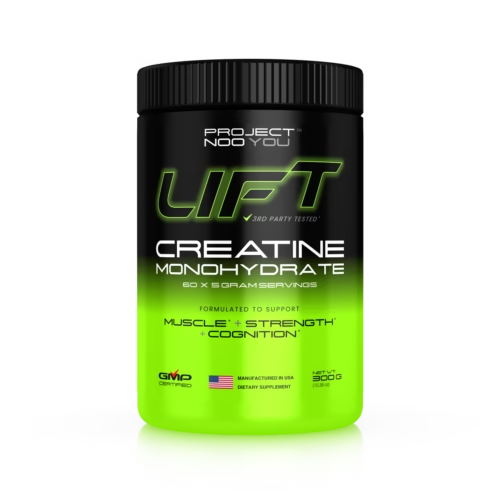
Creatine is one of the most researched and effective supplements in the world.
From professional athletes to everyday gym-goers, millions use it to:
- Increase strength
- Build muscle
- Improve training output
But there’s another side to creatine that most people overlook:
👉 It also supports brain energy and cognitive performance
Despite its popularity, many people still don’t fully understand what creatine actually does in the body — or why it consistently outperforms nearly every other supplement on the market.
This guide gives you a clear, evidence-based introduction to creatine:
- The myths you should ignore
- What it is
- How it works
- The benefits you can expect
What Is Creatine?
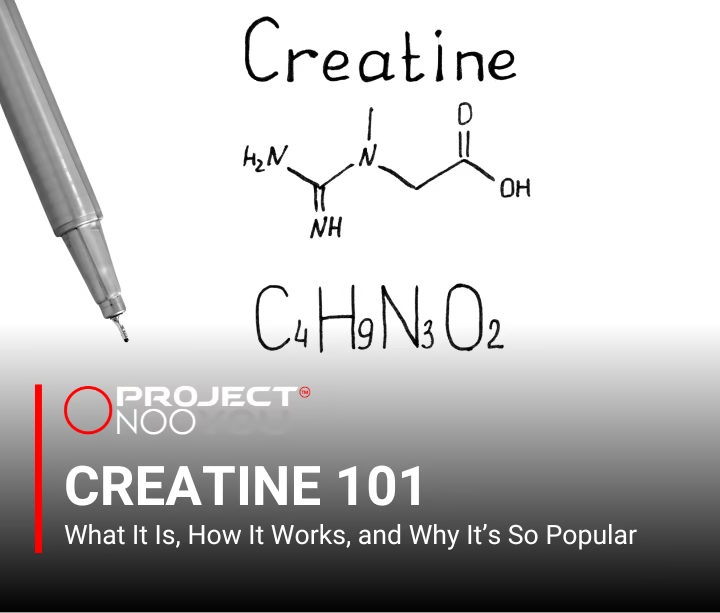
Creatine is a naturally occurring compound made from three amino acids: glycine, arginine, and methionine. Your body stores creatine primarily in your muscles as phosphocreatine, a form of stored energy.
You produce a small amount of creatine on your own, and you also get some from food — mainly red meat and fish. However, reaching optimal levels through diet alone is nearly impossible, which is why supplementation has become so widely used.
But importantly:
👉 Creatine is also stored and used in the brain
How Creatine Works (Explained Simply)
To understand creatine, you need to understand one thing:
👉 ATP (adenosine triphosphate) — your body’s energy currency
Every action in your body depends on ATP:
- Muscle contraction
- Brain activity
- Focus and memory
The problem?
ATP gets used up very quickly — especially during:
- Stress
- Intense exercise
- Mental effort
Where Creatine Comes In
Creatine increases your body’s phosphocreatine stores, which help regenerate ATP rapidly.
In simple terms:
👉 Creatine helps your body recharge energy faster
This leads to:
- More available energy
- Better performance
- Reduced fatigue
Muscles vs Brain
Most people only think about muscles:
- More ATP → better strength and power
But the same applies to your brain:
- More ATP → better mental clarity and focus
This is why creatine is now being studied for:
- Memory
- Cognitive performance
- Mental fatigue
Key Benefits of Creatine
Creatine’s benefits are backed by more than 700 peer-reviewed studies. These are the most consistently proven advantages:
1. Increased Strength and Power
Creatine helps your body regenerate ATP faster, allowing you to lift heavier weights and push harder during training.
2. More Muscle Growth
By enabling more reps, more weight, and more overall training volume, creatine promotes greater muscle hypertrophy over time.
3. Faster Recovery Between Sets
With quicker ATP replenishment, you can rest less and train more efficiently, improving workout quality.
4. Improved High-Intensity Performance
Creatine enhances performance in any activity involving explosive energy, including sprinting, jumping, and interval training.
5. Brain and Cognitive Benefits
Less known but scientifically supported: creatine also aids brain energy metabolism, showing benefits for memory, focus, fatigue resistance, and mood.
6. Strong Safety Profile
Creatine is one of the safest supplements available when taken at recommended doses (3–5g daily). Long-term studies show no harm to healthy kidneys, hydration status, or cardiovascular health.
Why Creatine Matters More After 40
As we age:
- Energy production becomes less efficient
- Mitochondrial function declines
- Mental fatigue becomes more noticeable
This can show up as:
- Brain fog
- Reduced focus
- Slower thinking
👉 This isn’t just “aging” — it’s often an energy issue
Because creatine supports ATP production, it may help:
- Maintain brain energy
- Improve mental consistency
- Reduce cognitive fatigue
Common Myths About Creatine
Creatine is misunderstood. Let’s clarify some of the biggest misconceptions:
Myth 1: “Creatine is a steroid.”
False. Creatine is not a hormone, not performance-enhancing in the steroid sense, and is found naturally in your body.
Myth 2: “Creatine damages your kidneys.”
Research consistently shows no harm to kidney function in healthy individuals.
Myth 3: “Creatine causes bloating.”
Creatine increases intramuscular water — water inside the muscle — not bloating around your stomach.
Myth 4: “Creatine only helps bodybuilders.”
Creatine benefits athletes, beginners, women, older adults, vegans, students, and anyone seeking better energy production.
How Much Creatine Should You Take?
For most people:
- Daily dose: 3–5 grams per day
- Loading phase: Optional; 20g per day for 5–7 days (faster saturation)
- Timing: Anytime is fine — consistency matters more than timing
Creatine monohydrate remains the gold standard form.
Who Should Use Creatine?
Creatine is one of the few supplements that works across nearly all groups:
- Strength athletes
- Gym beginners
- Adults over 40
- People experiencing brain fog
- Vegans/vegetarians (lower baseline levels)
- Students and professionals
- Anyone looking to support energy and performance
Creatine is simple, safe, and incredibly effective.
It’s not just a “muscle supplement.”
It’s a foundational energy support compound that affects:
- Physical performance
- Mental clarity
- Cognitive endurance
If your goal is to:
- Get stronger
- Improve performance
- Stay sharp as you age
Creatine is one of the most practical supplements you can take.
In the next article in this series, we’ll compare the different types of creatine and identify which one is actually worth your money — and which forms are mostly marketing hype.