

Creatine is best known for improving physical performance, but an increasing body of research shows it also plays a meaningful role in brain energy metabolism.
Your brain is one of the most energy-demanding organs in the body. When energy availability drops—due to stress, sleep deprivation, aging, or heavy cognitive load—mental performance often declines.
Creatine helps address that problem at the cellular level.
This article explains how creatine works in the brain, what the research actually shows for cognition and mental fatigue, and who may benefit most.
The brain uses ATP (adenosine triphosphate) continuously to support:
Just like muscle tissue, the brain stores creatine and phosphocreatine to help regenerate ATP quickly when demand increases.
When brain energy availability is compromised, cognitive performance can suffer.
Creatine acts as an energy buffer.
Creatine crosses the blood–brain barrier and increases brain creatine stores, particularly in areas involved in cognition and executive function.
Research suggests this may help:
This mechanism—not stimulation—is why creatine is being studied for cognitive performance.
Several studies have examined creatine’s effects on short-term memory, working memory, and information processing, particularly under stressful conditions.
What research suggests:
These effects are not dramatic or stimulant-like, but they are measurable and consistent under the right conditions.
One of the most interesting areas of creatine research involves sleep loss.
Studies show that creatine supplementation may:
This has relevance for:
Creatine does not replace sleep—but it may buffer the cognitive cost when sleep is compromised.
Chronic stress increases energy demand in the brain.
Emerging research suggests creatine may:
This is one reason creatine is increasingly discussed in neuroprotective and psychiatric research contexts—not as a medication, but as metabolic support.
Research into creatine and mood is still evolving, but early findings suggest possible benefits in:
Creatine is not an antidepressant, but its role in brain energy metabolism may partially explain why some individuals report improved mental well-being when supplementing.
Creatine’s cognitive benefits appear strongest in populations with lower baseline creatine levels or higher energy demands.
These include:
For individuals with already high dietary creatine intake and low stress, effects may be subtle—but still present.
As we age, brain energy metabolism becomes less efficient.
Creatine is being explored as a way to:
While creatine is not a treatment for neurodegenerative disease, it is increasingly viewed as a nutritional support for healthy brain aging.
Creatine has been studied extensively for safety.
At standard doses (3–5g per day):
Creatine is naturally present in the brain and is considered physiologically compatible.
3–5 grams per day
Creatine is not an acute nootropic. Benefits accrue with consistent use over time.
It’s important to be clear – creatine does not:
Its effects are subtle, cumulative, and metabolic—not neurological stimulation.
Unlike many nootropics that target neurotransmitters, creatine supports energy availability.
This makes it:
Creatine can also stack well with:
15% DISCOUNT FOR NEW USERS
If you’re curious about creatine not just for training, but also for mental performance and energy, starting with a clean, research-aligned product matters.
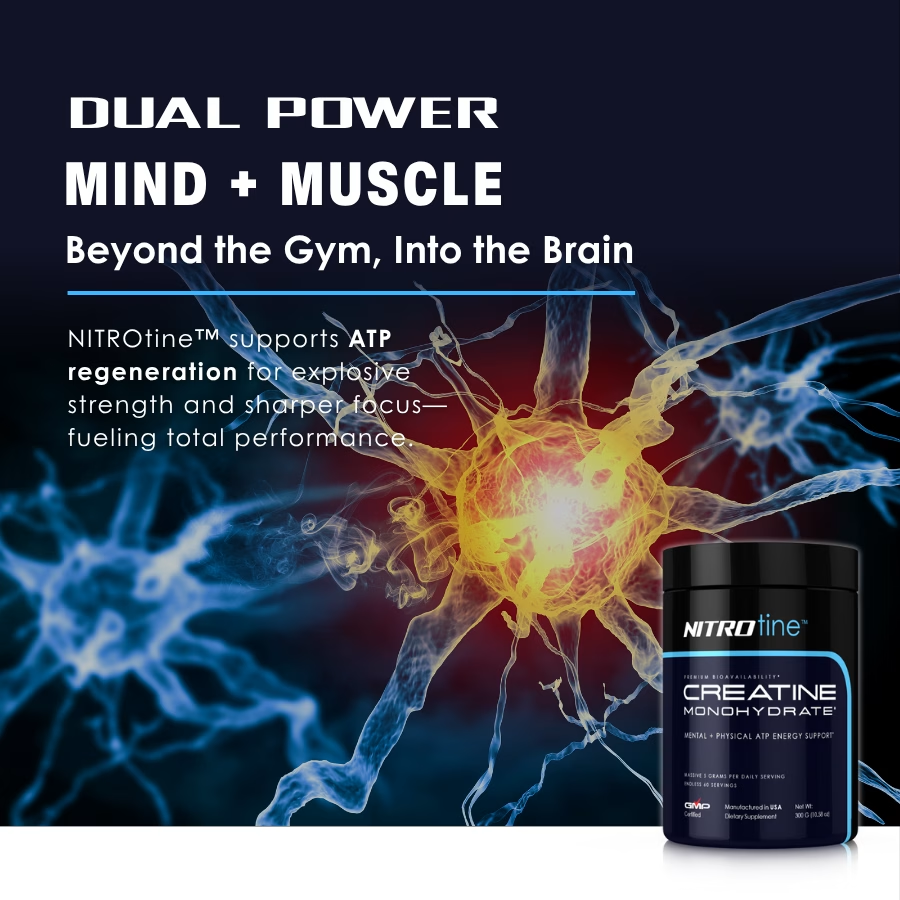
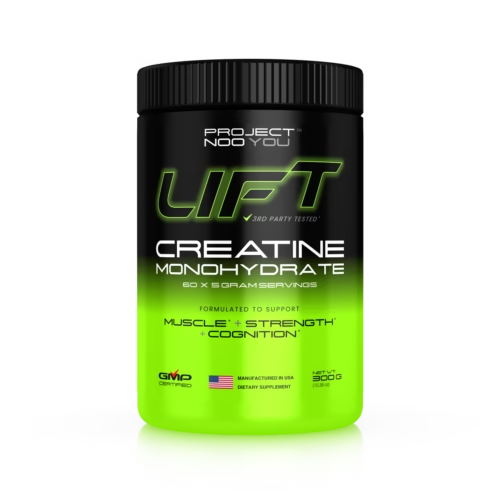
NITROtine™ is a premium micronized creatine monohydrate designed for daily use—without stimulants or unnecessary additives.
New users get 15% off
Use code Nitrotine15 at checkout.