

Creatine is one of the most researched supplements in sports nutrition, yet the market is crowded with different versions claiming to be more absorbable, more powerful, or more “advanced” than the original.
But here’s the truth: not all creatine types are supported by strong science — and many are mostly marketing.
This guide breaks down the major forms of creatine, what the research actually says, and which one provides the best performance for your budget.
What Most People Don’t Know
More than 95% of clinical studies on creatine use creatine monohydrate.
If creatine has a proven benefit — strength, muscle gain, recovery, performance — monohydrate is almost always the form used.
But let’s break down each type so you can make an informed decision.
The Different Types of Creatine
1. Creatine Monohydrate (The Gold Standard)
What it is:
The most basic and well-researched form of creatine: creatine + one water molecule.
Pros:
- Backed by decades of research
- Safest and most effective form
- Most affordable
- Proven to increase strength, power, and muscle growth
- Works for virtually everyone
- Micronized versions mix better and cause fewer stomach issues
Cons:
Some people report slight stomach discomfort (usually solved by using micronized powder)
Verdict:
If you want performance, safety, and best value — this is the form to choose.
2. Creatine HCl (Hydrochloride)
What it is:
Creatine bound to hydrochloric acid. Marketed as being more soluble and easier to digest.
Pros:
- Mixes very easily in water
- May be gentler on the stomach for some users
Cons:
- Very limited research compared to monohydrate
- No proven performance advantage
- Much more expensive
Verdict:
Useful if regular creatine upsets your stomach — otherwise, not worth the extra cost.
3. Creatine Ethyl Ester (CEE)
What it is:
Creatine combined with an ester to supposedly enhance absorption.
Pros:
- Marketed to reduce water retention
Cons:
- Research shows it is less effective than monohydrate
- Converts to creatinine (a waste product) more rapidly
- Expensive and underperforms
Verdict:
Considered one of the worst forms. Avoid.
4. Buffered Creatine (Kre-Alkalyn)
What it is:
Creatine processed with an alkaline powder (e.g., baking soda) to reduce acidity.
Pros:
- Claims to reduce stomach discomfort
Cons:
- Research shows no superior absorption
- No performance advantage
- Higher cost
Verdict:
All marketing — no measurable benefit over monohydrate.
5. Liquid Creatine
What it is:
Creatine stored in liquid solutions.
Pros:
Easy to consume
Cons:
- Creatine breaks down into creatinine in liquid form
- Losing potency before you ever take it
- Poor stability
Verdict:
Scientifically weak and generally ineffective.
6. Creatine Magnesium Chelate
What it is:
Creatine bound to magnesium to improve ATP regeneration.
Pros:
- Some early research shows potential improvements
- May help people with sensitive digestion
Cons:
- Limited studies
- Not better than monohydrate
- More expensive
Verdict:
Interesting, but not superior.
7. Creatine Citrate / Malate / Pyruvate
What they are:
Creatine combined with other acids to improve solubility.
Pros:
- They do mix better
Cons:
- Require higher doses to equal monohydrate
- No proven performance advantage
- Expensive
Verdict:
Paying more for the same effect — not worth it.
So… Which Form Should You Choose?
If your goal is strength, muscle growth, energy, performance, recovery, or cognitive support, the answer is simple:
Creatine Monohydrate remains the best — by a wide margin.
- Most researched
- Most effective
- Safest
- Cheapest
- Universally beneficial
Forms like HCl and Kre-Alkalyn may help with stomach comfort, but they do not outperform monohydrate in strength or muscle gains.
Bonus Tip: Micronized Creatine Monohydrate
If you want the best experience:
Choose micronized creatine monohydrate — a finer powder that mixes easily and reduces stomach issues.
Ready to Try Creatine for the First Time?
15% off for new users
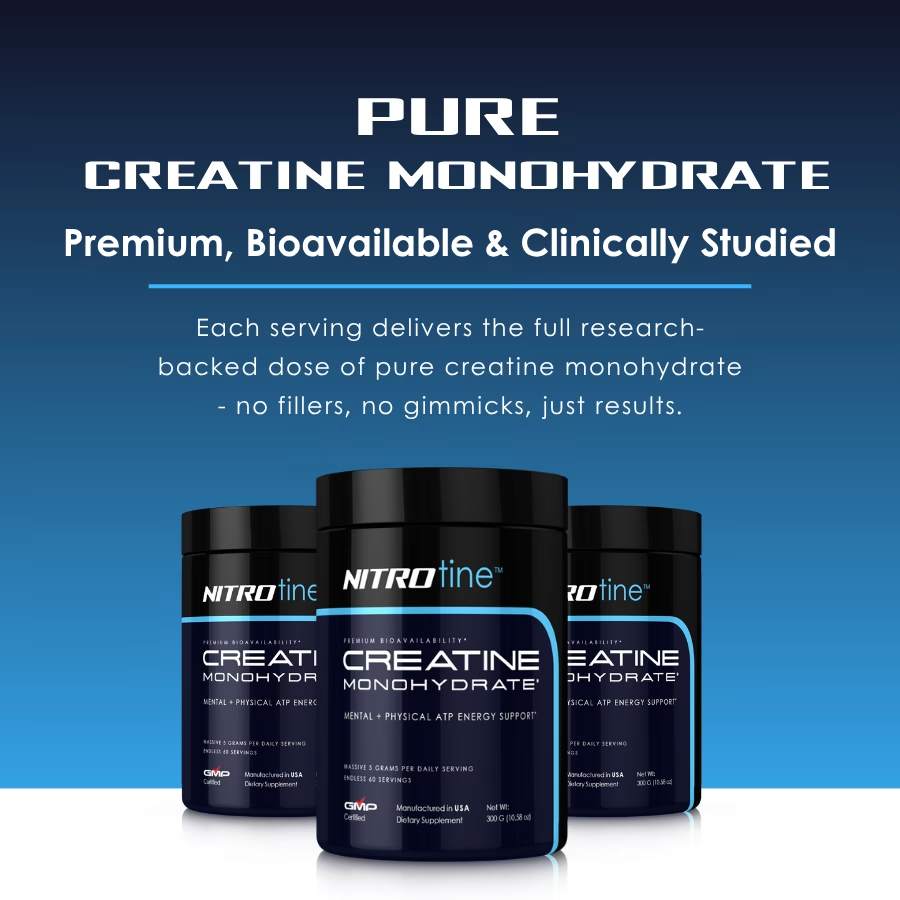
If you’re new to creatine and want a high-quality, beginner-friendly option, consider starting with NITROtine™ — our ultra-pure, micronized creatine monohydrate designed for maximum absorption and zero digestive discomfort.
NITROtine™ delivers exactly what the science supports:
- Premium-grade creatine monohydrate
- Fast mixing, easy on the stomach
- Clinically aligned 3–5g daily serving
- No fillers, no gimmicks, no unnecessary forms
Special Offer for New Users
Get 15% off your first bottle with code Nitrotine15 at checkout.
If you’ve been curious about creatine — this is the best place to start.
While supplement companies love to promote “advanced” or “next-gen” creatine versions, the science remains clear:
Nothing beats creatine monohydrate.
It provides the best results, best value, and best safety profile of all creatine forms available today.
In the next article, we’ll dive into Post 3: The Science of Creatine — What 700+ Studies Really Say.







5 Responses